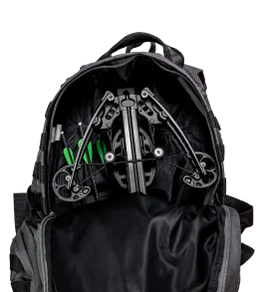
Crossbow Hunting from a Ground Blind: Settle In, Stay Ready
Crossbow hunting from a ground blind starts with room to move. Build a comfortable setup, choose compact gear, and settle in for the hunt.
In the video: BALLISTA demonstrates crossbow support options. A useful starting point when you're deciding what belongs beside your chair.
Crossbow hunting from a ground blind: make yourself at home
There is a particular kind of quiet inside a blind before daylight. The zipper is closed, the coffee is still hot, and every rustle outside sounds worth listening to. For a while, there's nowhere else you need to be.
Then a chair leg sinks into the dirt. Your pack is under the wrong elbow. The window sits just high enough that you have to straighten your back to see through the scope.
Little things, until you've lived with them for three hours.
A good blind setup takes care of those annoyances before the hunt begins. Whether you love the close-range challenge of a compact crossbow or prefer the feel of a larger hunting rig, the aim is the same: get comfortable enough to pay attention to the woods, not your equipment.
Your ground blind crossbow setup starts with the chair
Set the chair where you can see through the opening without hunching forward or perching on its edge. Keep your feet comfortably on the ground. Then, with the crossbow uncocked and unloaded, shoulder it and check the space around you.
Can you bring it into position without brushing the wall? Does the stock catch your jacket? Is an armrest exactly where your elbow wants to go? Try it wearing your hunting coat, not the T-shirt you had on when the blind arrived.
A soft camp chair may be wonderful around a fire and miserable when you need to sit upright. Choose the seat by how you move in it. Shift your weight, lean back, and turn a little. If it squeaks in the yard, it will sound much louder in your head when the woods go still.
Now put your pack, binoculars, and drink where you can reach them without a treasure hunt. Leave the doorway clear. If a buddy is joining you, rehearse with both of you inside. A “two-person blind” can feel surprisingly small once two hunters bring their usual gear.
A compact hunting crossbow leaves you breathing room
You don't have to replace a crossbow you already enjoy just because you're hunting from a blind. Start by trying your own setup. But if you're choosing a new one, handling it while seated tells you something a speed chart never will.
The BAT Reverse with L-Stock pairs the compact BAT Reverse platform with shoulder support. Its listed weight with the L-Stock is 3.9 lb. That combination suits the hunter who likes a small, lively crossbow but still wants the familiar feel of a stock against the shoulder. There's pleasure in carrying less gear and knowing your setup well.
The Hawkwing offers another take on a compact hunting crossbow: a 4.8 lb hunting platform with an adjustable buttstock and built-in self-retracting cocking assistance. It's worth a look if you want a dedicated hunting rig that stays manageable on the walk in and in the space around your seat.
Some of us enjoy getting close with a little bow. Others want a more substantial rig and a scope they know by heart. Pick the one you enjoy practicing with, then give it enough room to work.
Let the rest carry the weight
Holding a crossbow up for a quick look is one thing. Keeping it ready through a long, uneventful stretch is another. A steady rest can make the wait easier and leave your shoulders feeling fresher when the morning finally gets interesting.
A pop-up blind's fabric window isn't a shooting rest. Bring support that stands on its own instead of asking the blind wall to do the job.
The Mighty Tactical Tripod 303 with Picatinny Adapter is one option for a compatible setup. Its adjustable legs let you work around your seated position, and the included adapter connects a suitable Picatinny rail to the tripod head. Check the mounting arrangement on your crossbow first; some configurations need a separate bottom rail.

Set the support height to you, rather than bending yourself around it. Check that the legs don't block the doorway or tangle with your boots. If the whole arrangement feels awkward during a relaxed afternoon at home, simplify it. Extra equipment is only useful when it makes your day better.
Give the crossbow room, not just the scope
A clear view through the scope doesn't tell the whole story. The bolt travels below your line of sight, and the limbs need room to move when the crossbow fires. Window edges, loose fabric, and blind poles all deserve a look before you settle in.
Wisconsin DNR's crossbow safety guidance emphasizes keeping the limbs free of obstructions and hands clear of the string path. Inside a blind, check the full space the limbs and string need, not just the bow's narrow cocked width. Keep clothing clear as well, and use an open shooting window with the mesh out of the way.
Do your fit rehearsal with an uncocked, unloaded crossbow. Before hunting, practice from the same seated position at a proper range, with a suitable target and backstop. Familiarity is worth more than trying to sort out a cramped position when an animal appears. For loading, unloading, and care, follow your model's BALLISTA manual.
Leave yourself time to enjoy the wait
Once the practical work is done, let the blind be what you came for: a place to watch and listen. A squirrel may provide all the excitement for the first hour. Your coffee may go cold. The deer, as usual, won't care what time you got up.
That's hunting. Some mornings give you a shot, some give you a story, and some simply remind you why you wanted to be out there.
The best setup doesn't take over that experience. It lets you sit comfortably, handle your crossbow with confidence, and recognize your moment when it comes. The crossbow is part of the hunt. You're the hunter.
Ground blind hunting: a few common questions
Can you use a crossbow in a ground blind?
Yes, with enough room for the hunter, the crossbow, and full limb and string movement. Check the rules for your hunting location, season, equipment, and blind placement. Our US crossbow regulations guide helps you find the relevant state information.
Do you need a tripod for crossbow hunting from a blind?
No. A suitable independent rest may be all you need. A tripod is useful when you want adjustable support without relying on the blind itself; the right choice is the one that fits your crossbow and leaves you comfortable room to move.
Is a small crossbow better for a ground blind?
A smaller crossbow can be easier to position in a confined space. Your preferred stock, optic, and support matter too. Try the complete arrangement while seated before deciding — a bow that feels right in your hands still needs to feel right beside your chair.
Ready to make yourself comfortable? Explore the BALLISTA crossbow lineup and build a setup you'll look forward to taking into the woods. If you're sorting out a stock or support, our team can help you find the right fit.