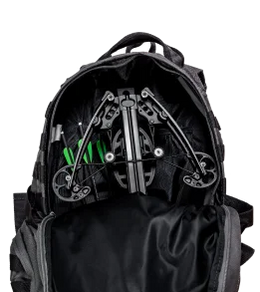
Anatomia de la ballesta de pistola
Albert walks through the crossbow from the front stirrup to the trigger, then explains the bolt and built-in cocking system.
150 lb of draw weight. Just 50 lb at the cocking handle. Both numbers describe the BALLISTA BAT Reverse — and its crossbow anatomy explains why. The limbs supply the shot’s energy, while a built-in pulley-assisted mechanism makes the draw easier on your hands.
The anatomy video above shows the BAT’s working parts. The short demonstration below shows a simple way to make cocking more comfortable.
Make Cocking More Comfortable with the Foot Stirrup
The short video demonstrates a useful option when an arm-only pull feels awkward. The stirrup anchors the crossbow, allowing a steadier upward pull using your body position:
- Place the front on firm, level ground with the stirrup securely supported.
- Step on the stirrup to hold the crossbow steady.
- Hold the main grip, keep your finger clear of the trigger, and pull the cocking handle straight upward until the string latches.
- Guide the handle back to its resting position as the cord retracts, and confirm the safety is engaged.
The stirrup improves stability and leverage from your stance; it does not change the bow’s draw-weight rating. Our foot-stirrup cocking guide covers this method in more detail.
The anatomy video is an older walkthrough. Current draw-weight and cocking-effort figures are listed in the table below.
150 lb Limbs. 50 lb to Cock. How Can Both Be True?
They describe forces at different points in the system. The BAT Reverse’s 150 lb rating is the bow’s draw weight. The 50 lb figure is the cocking effort at the handle. You still draw the crossbow fully; the built-in assist changes how you apply the force.
Inside the crossbow, the cocking cord works through a pulley-assisted mechanism that moves the sled and draws the string. You pull a longer length of cord to move the string a shorter distance. This trade is called mechanical advantage: less force at your hand, more travel at the handle.
The limbs still reach their designed cocked position and store energy for the shot. The cord then retracts automatically, keeping the cocking aid ready for the next cycle. Retraction tidies away the cord; the pulley system provides the assistance.
The same built-in cocking approach runs through the BALLISTA lineup, with different effort levels:
| Crossbow | Limb draw weight | Cocking effort |
|---|---|---|
| BAT | 130 lb | 40 lb |
| BAT Reverse | 150 lb | 50 lb |
| MEGABAT | 330 lb | 110 lb |
| MEGABAT Reverse | 360 lb | 120 lb |
| Hawkwing | 200 lb | 72 lb |
Current published specifications for these models. Cocking effort is roughly one-third of the limb draw-weight rating; it is not identical across the range.
That difference concerns force. It does not mean a 150 lb crossbow delivers three times the arrow energy of a 50 lb crossbow. Shot energy also depends on the draw-force curve, power stroke, and arrow setup. Easier cocking lets you draw the same bow with less force at the handle.
Crossbow Anatomy: Meet the Parts Behind the Shot

Limbs and Riser — Where the Energy Starts
The limbs are flexible springs. Cocking bends them, storing the energy that will launch the bolt. On the BAT, split limbs form two narrow sections on each side, with a cam between them. The riser connects the limb assembly to the main body and keeps that assembly aligned.
Reverse-draw geometry changes the layout. On the BAT Reverse, the string has a longer power stroke — 8.5 inches versus the BAT’s 6.75 inches. That gives it more distance over which to accelerate the bolt while retaining a compact body.
Cams, String, and Cables — The Compound System
Cams are the shaped wheels at the limb tips. As they rotate, their changing leverage controls how the limbs load and how the string moves. The cables transmit load between the cams and limbs and help coordinate their movement.
The string has a different job: its center contacts the bolt’s nock and drives the bolt forward when released. The protective wrapping around the working section is called serving. Cams and cables manage the bow’s draw cycle; the built-in cocking assist is the mechanism you operate with the rear handle.
Pulleys, Sled, and Cocking Handle — Your Connection to the Draw
Pulleys guide moving lines; within the cocking mechanism, the pulley arrangement also provides mechanical advantage. The sled travels along the body and engages the string to draw it back evenly. Pulling the rear handle operates this assembly, bringing the string to the latch without a separate loose rope cocker.
Flight Rail and String Stoppers — Keeping Movement Controlled
The flight rail is the track the bolt rests on. Its groove guides the bolt during the start of the shot. String stoppers limit the string’s forward travel after release. Keep the rail clean and use the recommended lubricant to protect the string’s serving and maintain smooth operation.
Retention Spring, Latch, and Safety — Three Different Jobs
The retention spring presses the bolt against the rail to help keep it in place. The latch holds the drawn string, so your arms do not have to carry that load while aiming. Pulling the trigger releases the latch.
On the BAT demonstrated in the video, cocking automatically engages the safety. A safety blocks the trigger; an anti-dry-fire mechanism checks for a seated bolt. These are different functions. Hawkwing adds anti-dry-fire protection, but every model still requires a correctly loaded bolt before shooting.
Grip, Trigger Guard, and Stock — Steady Handling
The pistol grip is your main handhold. The trigger guard helps shield the trigger, while the foregrip gives your support hand a stable place below the string’s path. A compatible stock adds shoulder support. Keep your finger outside the trigger guard until you are ready to shoot.
Picatinny Rail — A Place for Your Optic
The Picatinny rail is the mounting platform for a compatible red dot or scope. It is separate from the flight rail: one holds your optic; the other guides the bolt. Compatible lower mounts can support accessories such as a foregrip or bowfishing reel.
The Bolt Completes the System
A bolt has a shaft, stabilizing vanes, a nock, an insert, and a tip. The nock connects it to the string; the insert holds a compatible field point or broadhead. Length, weight, diameter, and nock type must match the crossbow. Use the recommended bolts for your model.
Seat the bolt fully so its nock contacts the string. A gap can let the string accelerate before engaging the bolt, potentially causing damage similar to a dry fire.
See Easy Cocking in Action
Now that you know the parts, watch them work together. This quick demonstration shows cocking and loading in one short sequence: the rear handle draws the string back through the built-in assist, then the bolt is seated on the rail.
It is the same principle explained above — full draw with less force at the handle. The foot stirrup provides a steady base, while the cocking mechanism helps with the pull.
A Few Habits That Keep Your Crossbow Ready
Inspect the limbs, string, cables, and bolt before use. Wax exposed string fibers and lubricate the rail as directed in your model’s BALLISTA user manual. Keep hands below the string’s path, point toward a safe backstop, and never dry fire. Store the crossbow uncocked.
Frequently Asked Questions
Does the retracting cord uncock the crossbow?
No. It returns the cocking aid to its resting position; the latch still holds the drawn string. Decocking is a separate procedure described in your model’s manual.
Are all BALLISTA crossbows 50 lb to cock?
No. The 50 lb specification applies to the BAT Reverse listed here. Each model has its own draw-weight and cocking-effort ratings, as shown in the table.
Know the parts. Enjoy the difference. Explore the BALLISTA crossbow lineup to find your fit. For setup or maintenance questions, our support team can help.