Bowfishing for Beginners: Gear, Aiming & Your First Carp (2026 Guide)
Bowfishing for beginners is easier than it looks: you need a bow you can aim fast, a reel and line that won't tangle, a barbed arrow tied off correctly, and one mental trick — aim low. Peak season is right now, the water is full of carp and gar, and a compact crossbow setup gets you on fish your first night out. Here's the gear, the aiming rule that fixes 90% of misses, and how to land your first carp.
What is bowfishing, and why start now?
Bowfishing is exactly what it sounds like: instead of a hook and bait, you shoot a barbed arrow tethered to a reel line, then crank the fish back in. It targets rough fish — species you're allowed to remove in large numbers — not game fish like bass or trout. Late spring through summer is the peak: warm shallows pull carp up to feed and spawn, gar cruise the surface, and you can see your targets. That visibility is why it's the perfect time for a beginner to start. You're hunting fish you can actually see.
The other reason it's beginner-friendly: the shots are close. Most bowfishing happens inside 10–15 feet, in water 1–4 feet deep. You don't need long-range accuracy. You need a setup that's quick to aim and a reel that recovers line cleanly.
Bowfishing gear for beginners: the short list
You can overthink this. Don't. A complete beginner rig is four things: a bow, a reel, line, and bowfishing arrows. The fastest way to get all of it at once is a kit.
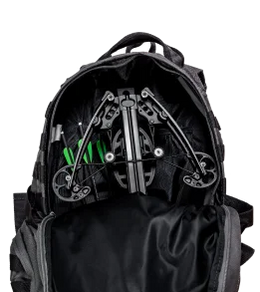
- The bow. A compact crossbow is the most forgiving starter platform — it holds itself at full draw, so you aim like a rifle instead of fighting a heavy pull while a fish swims off. The Ballista BAT ($299.95) is the world's smallest compound crossbow and an ideal bowfishing base: light, one-handed, and easy to swing onto a moving target.
- The reel. Line management makes or breaks your night. The BL25 Spincast Bowfishing Reel ($29.95) is a corrosion-resistant stainless spincast that mounts to the bow — push the button, shoot, then reel the fish straight back. Spincast reels are the right call for beginners because there's no tangle drama on the shot.
- The arrows. Bowfishing arrows are heavy, solid fiberglass with a barbed point and no fletching. They're built to punch through water and hold a fish. See them in action below.
- The line. Heavy braided bowfishing line (typically 200+ lb test) tied from the arrow to the reel. How you tie it matters — more on that in a second.
The simplest path is the BAT Bowfishing Bundle ($409.75), which packages the BAT crossbow with the bowfishing reel, arrows, and line so you're rigged out of the box. For a deeper look at reel choices — spincast vs. retriever vs. the AquaSnipe — read our bowfishing reel buyer's guide.
Rig it right: tying line to your bowfishing arrow
The single most common beginner failure isn't the shot — it's the arrow ripping free of the line on a strong fish. Carp pull hard, and a sloppy knot fails right when it matters. Tie the line to the arrow's slide or safety slide correctly, and you'll keep the fish on. We walk through the exact method, knot and all, in tying line to a bowfishing arrow. Do this before your first trip, not on the bank in the dark.
The aiming rule that fixes everything: aim low
Here's the part nobody warns beginners about. Water bends light — refraction — so the fish is not where it appears to be. It looks shallower and closer to the surface than it actually is. If you aim at what you see, you shoot high and miss over the fish's back every time.
The fix is a rule of thumb: aim about 6 inches below the fish for a close, shallow target. The deeper the fish and the steeper your angle down into the water, the more you compensate — aim lower still. Some bowfishers use the "10-4 rule" (for a fish 10 feet away in 1 foot of water, aim ~4 inches low) and adjust from there, but for your first night, just burn one phrase into your head: aim low, then a little lower.
- Shallow fish near the surface, close range: aim ~6 inches low.
- Deeper fish or a steeper downward angle: aim even lower.
- Miss high? You didn't aim low enough. Miss low? Rare — ease off.
You'll dial it in within a dozen shots. Refraction is consistent, so once your brain learns the offset, it sticks.
Target species: carp and gar
For a first outing, you want fish that are abundant, legal to take, and big enough to be satisfying.
- Common carp are the classic bowfishing target. They're invasive in much of the U.S., crowd shallow water in warm months, and feed with their backs near the surface — a perfect, slow, visible target. Your first carp is almost certainly going to be your first bowfishing fish, period.
- Gar (longnose, spotted, alligator gar where legal) cruise just under the surface and offer a more sporting, harder-to-pierce target thanks to their armored scales. Hit them solidly behind the head. Gar are a great "next step" once you've landed a few carp.
Other common rough-fish targets include bowfin, buffalo, and tilapia depending on your region. Always confirm what's legal where you are — which brings us to the one boring-but-critical step.
Licensing: don't skip this
Bowfishing is regulated, and the rules vary by state: most states require a fishing license, some require an additional bowfishing or "archery fishing" permit, and the list of legal species, legal waters, and night-shooting/light rules differs everywhere. Removing rough fish is usually encouraged, but game fish are off-limits to arrows. Check your state agency before you head out. For a state-by-state starting point and links, see Ballista's U.S. crossbow regulations guide, then confirm the bowfishing specifics with your state's fish & wildlife department.
Your first night, step by step
- Pre-trip: tie your line to the arrow at home and test the knot with a hard pull.
- Go shallow and slow — wade or drift quiet water 1–4 feet deep where carp are feeding.
- Spot a fish, settle, and aim about 6 inches below it.
- Shoot, then immediately reel — keep tension so the barb holds.
- Land it, reset the slide, re-spool your line, and find the next one.
FAQ
How do you aim when bowfishing?
Aim low. Because water refracts light, a fish appears higher and shallower than it really is. For a close, shallow target, aim roughly 6 inches below the fish; aim even lower for deeper fish or steeper downward angles. If you keep missing high, you aren't aiming low enough.
What is the best crossbow for bowfishing as a beginner?
A compact crossbow like the Ballista BAT is ideal: it holds at full draw so you aim like a rifle, it's light and one-handed, and it pairs with a spincast reel for clean line recovery. The BAT Bowfishing Bundle includes the bow, reel, arrows, and line in one kit.
What fish can you shoot when bowfishing?
Rough fish only — commonly carp, gar, bowfin, buffalo, and tilapia, depending on your state. Game fish such as bass and trout cannot be taken with a bow. Carp are the best first target: abundant, invasive, and easy to see in warm shallows.
Do you need a license to go bowfishing?
Almost always yes. Most states require a fishing license and some require an extra bowfishing permit, and legal species, waters, and night rules vary. Check your state fish & wildlife agency — start with our U.S. regulations guide.
Ready to get on the water? Grab the BAT Bowfishing Bundle to start rigged out of the box, or browse the full Ballista crossbow lineup and add the BL25 Spincast Reel to a bow you already own. Questions — our FAQ and support team have you covered.